I drive a 2022 Toyota Hilux with a 2.8 litre diesel engine. I also drive a BYD Sealion 7. Same person, two completely different machines, and that contrast has taught me more about electric cars in the city than any YouTube review ever could.
The Hilux is my daily workhorse. Fifteen to twenty kilometres every day, home to office and back, exactly the kind of driving that diesels are supposed to be efficient at. The Sealion 7 is what I take when I want to actually enjoy driving, when I have longer distances to cover, or when I head out of the valley for a proper run. I average somewhere between 25 and 40 kilometres on it about three days a week and once in a while I push it on a 400 kilometre long run.
That combination means I have a real comparison running in my head every single time I get behind either wheel. And there are things about owning an electric car in the city that nobody in the press ever seems to bother mentioning. So here they are.
Charging Fits Into Your Life Without You Even Noticing
Before I bought the Sealion 7 I thought charging would be this whole separate task I had to plan around. Like going to a petrol station but worse because it takes longer. That is not what happened at all.
At home I plug it in at night and wake up to a full battery. That is genuinely it. There is no trip to the station, no waiting, no standing outside in the heat or rain while the tank fills. I just drive and the car sorts itself out while I sleep. That alone changed how I think about owning this car.
When I am outside the valley I use public charging stations and even then it has never felt like a burden. I pull in, plug in, go have my meal, and by the time I have finished breakfast or lunch or dinner the car is ready. A full charge from around 30 percent to 100 takes roughly 45 to 60 minutes on a fast charger. That is a meal. It is not a wait, it is just a meal that happens to also charge your car.
The Cost Will Genuinely Shock You
This is the one that gets me every single time and I have owned this car long enough that you would think I would be used to it by now.
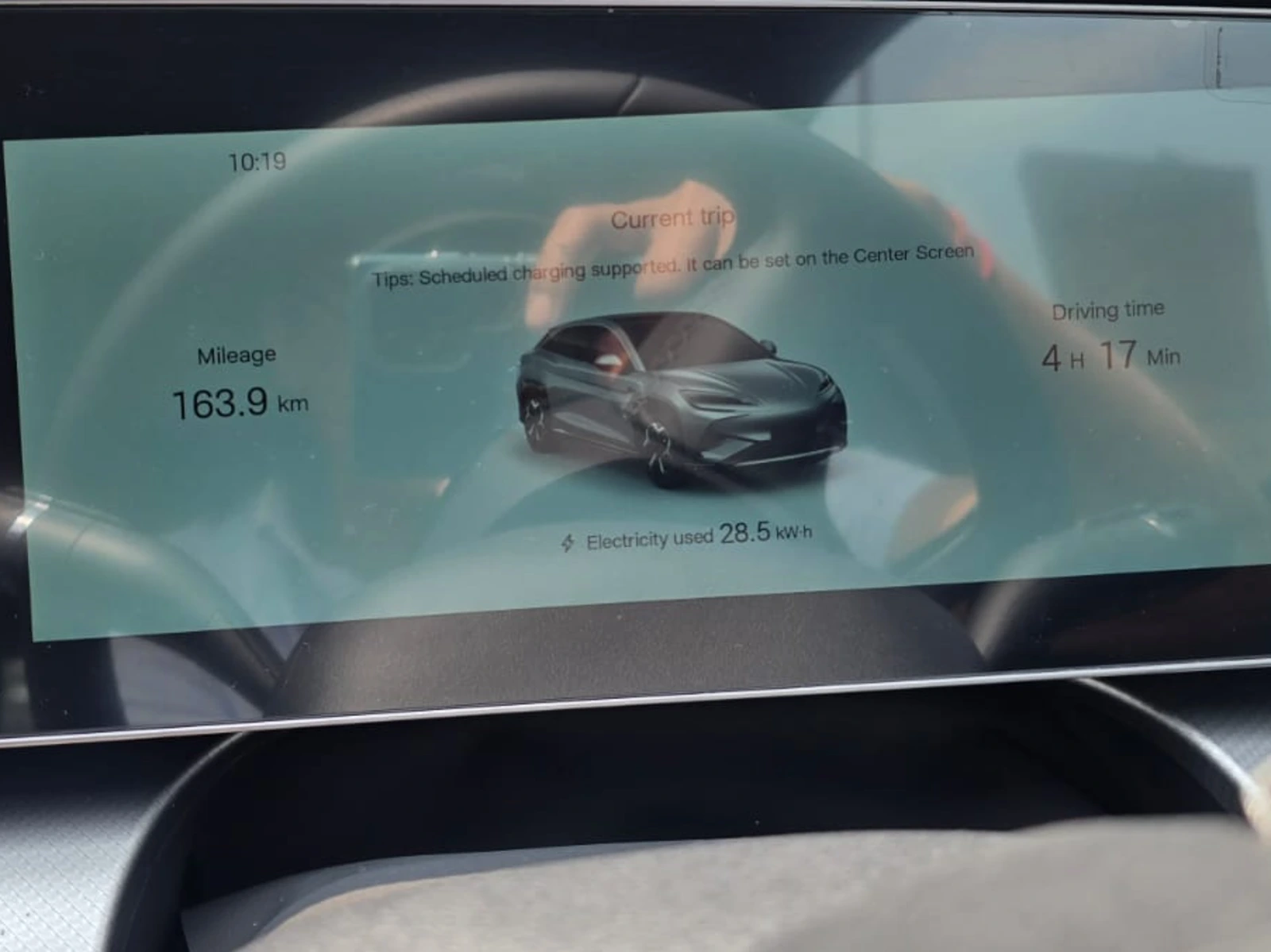
Charging the Sealion 7 from 30 percent to full costs me under Rs500. To put that in perspective for anyone reading this outside Nepal, Rs500 converts to roughly $3.50 in US dollars. That is not a typo. Three dollars and fifty cents to charge a car that does 440 kilometres on a full battery.
Now compare that to what the same charge costs in other parts of the world. In the UK a full home charge on a standard electricity tariff runs anywhere between £7 and £22, which is roughly $9 to $28. In the United States public fast charging typically sets you back somewhere between $15 and $25 for a full charge depending on which state you are in and which charging network you use. Australia sits in a similar range.
So yes, the economics of owning an electric car depend enormously on where you live. In Nepal right now electricity is cheap enough that charging this car feels almost free. Driving the Sealion 7 here genuinely costs less per kilometre than almost anything else on the road and that is not marketing language, that is what my actual wallet tells me every single time I plug in.
Now compare that to what the same charge costs in other parts of the world. In the UK a full home charge on a standard electricity tariff runs anywhere between £7 and £22, which is roughly $9 to $28. In the United States public fast charging typically sets you back somewhere between $15 and $25 for a full charge depending on which state you are in and which charging network you use. Australia sits in a similar range.
So yes, the economics of owning an electric car depend enormously on where you live. In Nepal right now electricity is cheap enough that charging this car feels almost free. Driving the Sealion 7 here genuinely costs less per kilometre than almost anything else on the road and that is not marketing language, that is what my actual wallet tells me every single time I plug in.
Under Rs500 — that is roughly $3.50 converted from Nepali Rupees — to go from 30 percent to 100 percent. I have bought bottles of water at airports that felt more expensive than charging this car.
Nobody puts a real number like that in a review because reviewers do not pay for their own charging. That number is from my actual wallet and it is the single biggest real world advantage of this car that I can point to.
City Traffic Is Where an Electric Car Genuinely Earns Its Keep
A diesel engine in stop and go traffic is working against itself. It is burning fuel to sit still, idling, waiting, inching forward. Every traffic jam is money leaving your pocket.
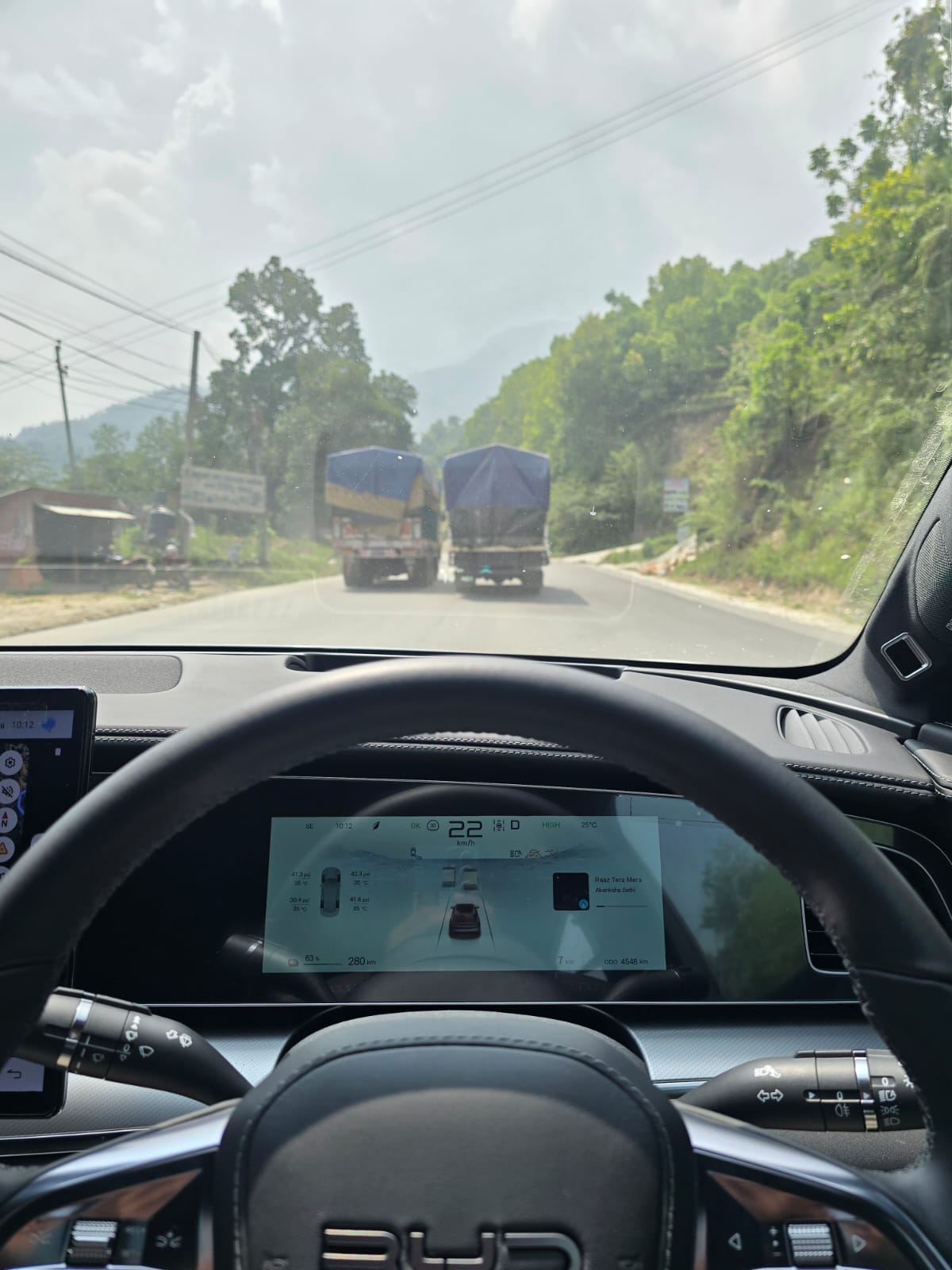
The Sealion 7 in the same traffic is doing the opposite. Every time you slow down or brake the car is recovering energy and putting it back into the battery. The heavier the traffic, the more the car is quietly padding its own range back. I noticed this on a particularly bad day when I expected my range to have dropped significantly after an hour of crawling through the city and it had barely moved. The car had been harvesting energy the whole time without me doing anything.
That is not something anyone told me before I bought it. I had to experience it myself to actually believe it.
The Silence Changes How You Drive
Get into the Hilux after driving the Sealion 7 for a few days and the diesel engine feels like it is announcing itself to the entire neighbourhood. The Sealion 7 is so quiet at city speeds that you become much more aware of everything else around you. Other cars, pedestrians, the actual sounds of the city. It sounds like a small thing but it genuinely changes the experience of being in traffic.
I also found myself less fatigued after city driving in the Sealion 7. No engine vibration, no constant low frequency noise from the drivetrain. After a long day in traffic the diesel leaves me feeling like I have been sitting in a machine for an hour. The electric leaves me feeling like I just went for a drive.
The One Place It Does Not Win
Ground clearance. I have to say it because leaving it out would make this post dishonest.
The Sealion 7 sits lower than it looks and on genuinely rough terrain or slippery uneven surfaces it does not inspire the same confidence as the Hilux. The Hilux was built for exactly those conditions. The Sealion 7 was not and it does not pretend to be, but if your city driving includes unpaved roads or any kind of rough surface you will feel that limitation. It has not stopped me using the car but it has made me choose the Hilux on certain days when I know the roads ahead are going to be rough.
That is the honest picture. The Sealion 7 is exceptional in the city in almost every way that matters. The cost, the comfort, the way it handles traffic, the charging experience. But it has its limits and anyone telling you otherwise is either not driving it in real conditions or is not being straight with you.
Would I Change Anything?
Not really. Having both the Hilux and the Sealion 7 means I have the right tool for every situation and that combination works well for how I actually live. But if I only had one car and I was spending most of my time in the city, the Sealion 7 would win without much debate.
Under Rs500 to charge. Meals that also happen to top up your battery. Traffic that charges the car instead of draining your wallet. These are not things I read in a brochure. These are things I discovered by actually driving the car and they are the reasons I keep reaching for those keys.
CarGuru, The Masala Feed