I'll admit it. For years I brushed off Chinese automakers the same way a lot of car people did. Cheap knockoffs, Copycat designs, Nothing you'd actually want in your driveway. Then I spent an afternoon going down a rabbit hole on the Zeekr 9X, and I came out the other side genuinely rattled. Not because it's flashy (although it absolutely is), but because the numbers just don't add up the way they're supposed to. A six seat family SUV isn't supposed to out accelerate a Porsche 911. And yet here we are.
Let me walk you through why this thing has quietly become one of the most talked about vehicles in the industry this year, and why even die hard petrolheads are struggling to write it off.
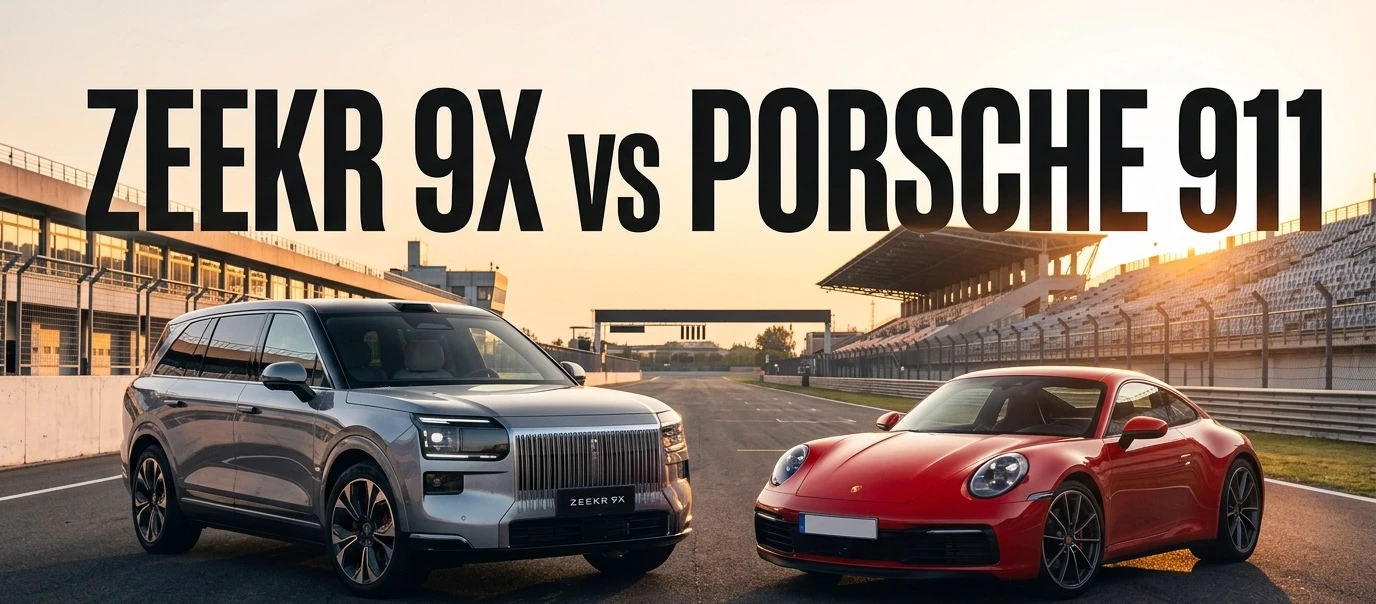
So What Actually Is the Zeekr 9X?
The Zeekr 9X is the flagship SUV from Zeekr, a premium brand under Geely, the same Chinese conglomerate that owns Volvo and Polestar. It's a full size, three row, six seater built for the kind of buyer who might otherwise be cross shopping a Range Rover or a Mercedes GLS. It debuted at Auto Shanghai and has since become Zeekr's first ever plug in hybrid, which is a notable shift for a brand that had previously gone all in on pure EVs.
Here's where it gets interesting though. This isn't a hybrid in the "sensible commuter" sense. It's a hybrid in the "why does my family SUV have supercar numbers" sense.
The Numbers That Made Me Stop Scrolling
I'll be honest, the first time I read the spec sheet I assumed there was a typo somewhere. There wasn't.
The top trim uses a turbocharged four cylinder engine paired with three electric motors, one up front and two independently driving the rear wheels. Combined output lands at 1,381 horsepower. For context, that's more power than a Lamborghini Huracan. In an SUV with a third row and cupholders for six.
The result is a 0 to 60 mph time of 3.1 seconds. Top speed sits around 149 mph. And because it's a plug in hybrid rather than a pure EV, you're not stuck worrying about range anxiety on a road trip. You get real electric only range on the bigger battery pack, fast charging that can take you from a low state of charge to nearly full in around 9 minutes, and a combined range that stretches well past what most EVs on the market can manage.
This is the part that gets car people excited, because it solves the actual problem most EV buyers still have. Range and charging speed. Zeekr basically said, why choose, and built something that tries to do both at once.
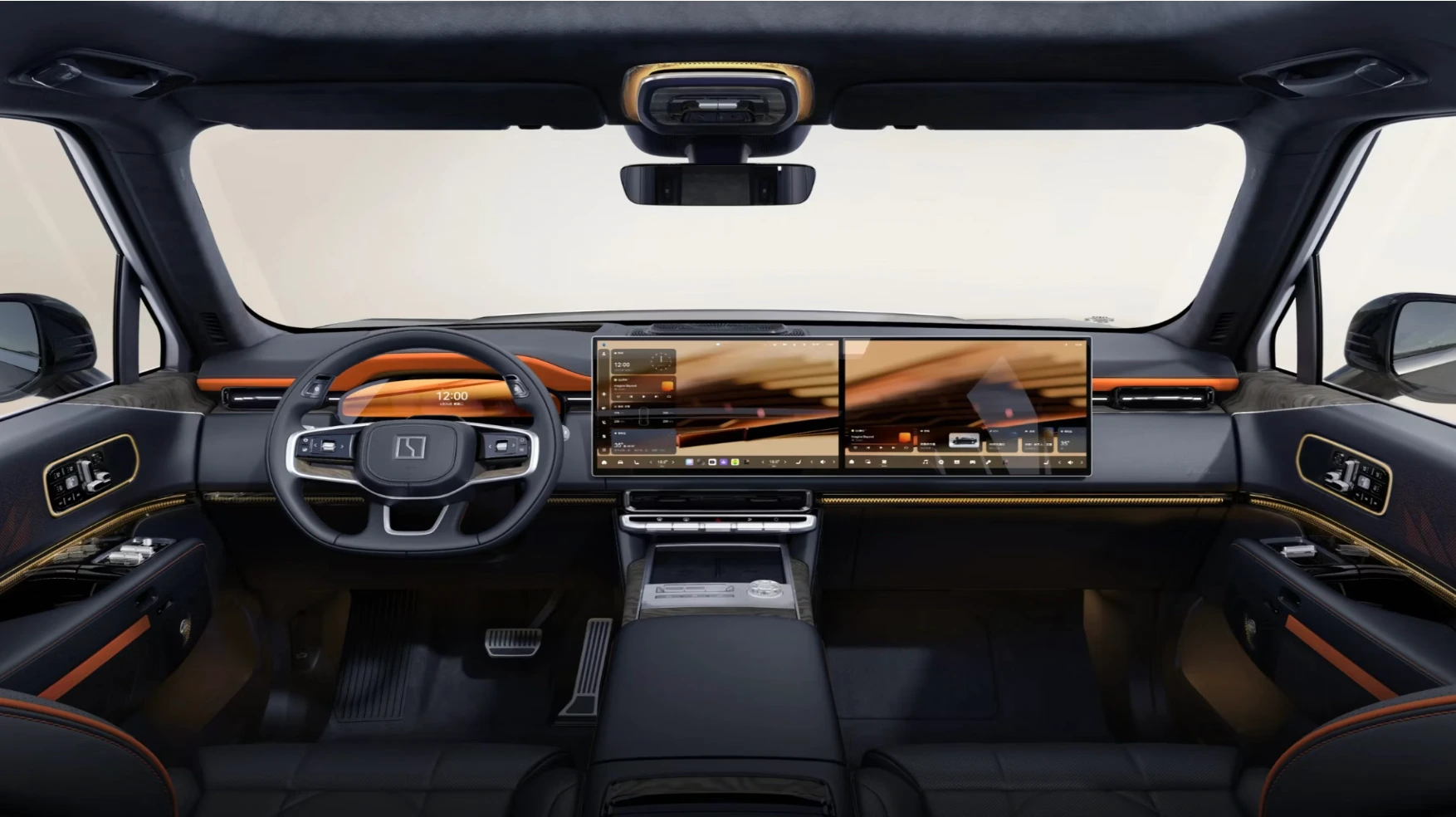
It Doesn't Just Have Power, It Has Brains
What really separates the 9X from being "just another fast SUV" is the tech stack underneath it. It's the first Zeekr model to run the brand's G Pilot H9 driver assistance system, which uses a genuinely absurd sensor array. We're talking a roof mounted long range LiDAR unit, additional solid state LiDAR sensors tucked into the fenders and bumper, radar units, and more than a dozen cameras, all feeding into dual Nvidia chips that Zeekr claims deliver enough computing power to support Level 3 autonomy.
Then there's the party trick that's been all over car forums lately. A recent software update added gesture based parking, which lets the car back itself out of a tight spot using hand signals instead of a key fob or app. It also has facial recognition built into the cabin experience, which personalizes settings the moment it identifies the driver. None of this is science fiction anymore. It's shipping in a production vehicle right now.
If you're the kind of person who nerds out over how quickly the auto industry is folding autonomous tech into everyday vehicles, this is worth watching closely. It's moving faster than most people outside the industry realize.
Then Mansory Got Involved
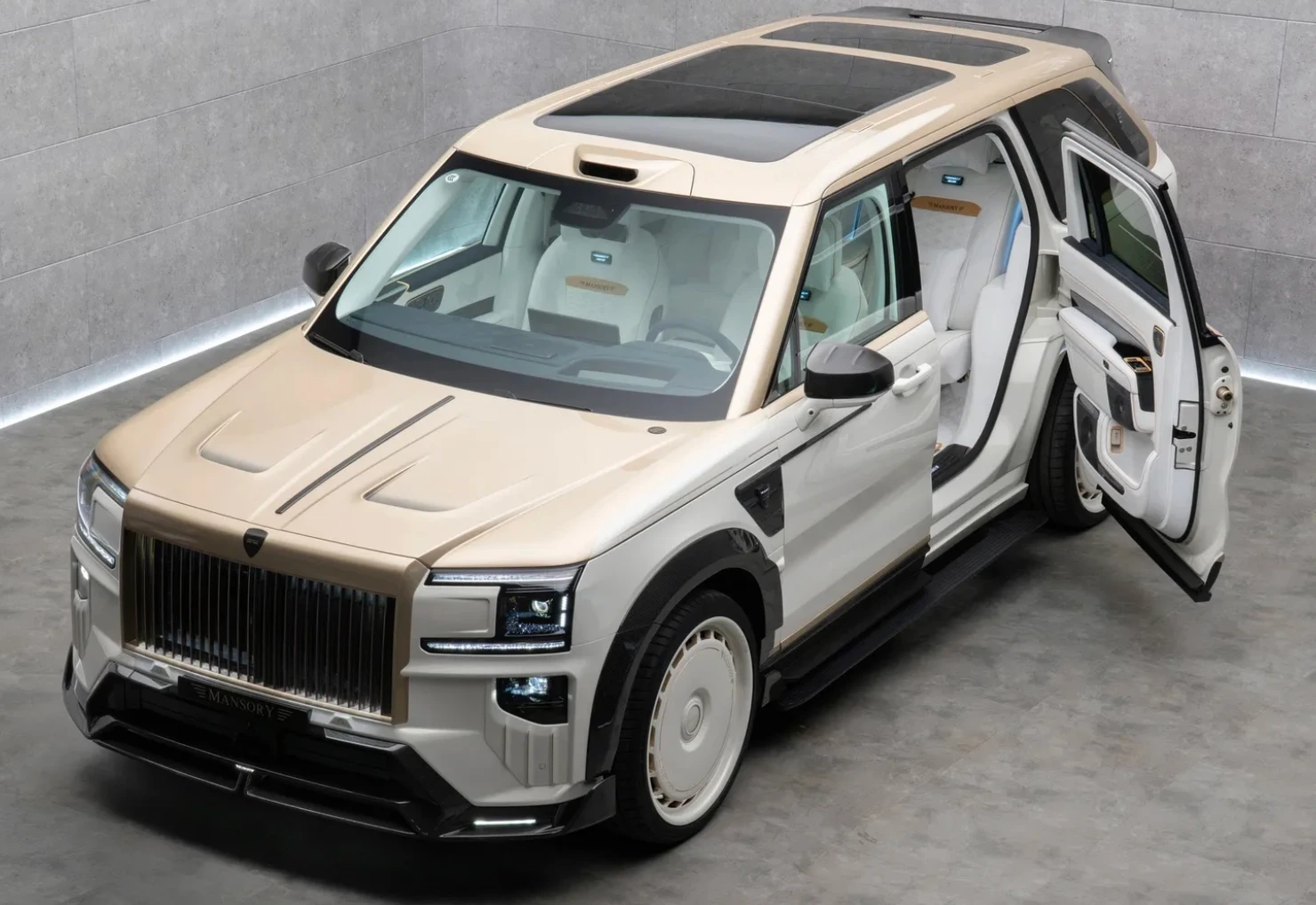
If the standard 9X wasn't enough of a headline, the story took an unexpected turn when Mansory, the German tuning house best known for turning Bugattis, Rolls Royces, and Lamborghinis into six figure statement pieces, unveiled a custom built 9X at the Beijing Auto Show. This wasn't just a random side project either. It marked the first time in Mansory's history that the company has ever modified a Chinese built car.
Out of every manufacturer on the planet, they chose Zeekr's flagship. The build features a full carbon fiber widebody kit, a reworked front end, a more aggressive diffuser, and rear hinged coach doors similar in style to a Rolls Royce Cullinan. Step inside and you get white leather upholstery with gold accents, Alcantara trim, and Mansory's signature illuminated badging throughout the cabin.
What's notable is what Mansory chose not to touch. The powertrain stayed completely stock. When your base model already produces 1,381 horsepower, there really isn't much left to squeeze out.
For a company that has built its entire reputation on transforming European and American icons, choosing a Chinese SUV as its first foray into that market says a lot about where the industry sees things heading.
The Question Everyone Keeps Asking: Could This Come to America?
This is usually where the conversation ends for a lot of enthusiasts, because right now the honest answer is no, not easily. The United States currently restricts the sale and import of connected vehicle software and hardware originating from China, citing national security concerns tied to data collection and remote vehicle access. On top of that, tariffs on Chinese built EVs currently sit above 100 percent, which effectively prices them out of the market even before restrictions come into play.
There's also active legislation working its way through Congress aimed at tightening those rules even further, with support from both political parties and some of Detroit's biggest automakers.
So for the time being, if you want a Zeekr 9X, you're looking at markets like China, parts of the Middle East, Australia, and potentially Europe down the line, rather than a dealership in the US. Whether that changes in the next few years depends heavily on how trade relations between the two countries evolve, and that's a conversation that's very much still unfolding.
Why This Car Matters Beyond the Spec Sheet
Here's the thing that stuck with me after digging into all of this. The Zeekr 9X isn't interesting just because it's fast, or because it looks like a Cullinan's cheaper cousin, or because a legendary tuning house decided to bless it with a widebody kit. It's interesting because it's a genuine signal of where global car manufacturing is heading.
Chinese automakers have spent the last decade being underestimated, and vehicles like the 9X are exactly why that's starting to change. When a brand can pack supercar level performance, genuinely advanced driver assistance tech, and a price point that undercuts its Western competitors by a significant margin, all into one vehicle, it forces the rest of the industry to pay attention.
Whether or not it ever legally reaches American driveways, the Zeekr 9X has already done its job. It's made the rest of the world's automakers a little more nervous, and it's made car enthusiasts like me a lot more curious about what's coming out of China next.